Boneless Couch vs Regular Couch: What Differs? (October 2026)
Choose a boneless couch for low, flexible lounging; choose a regular couch for a framed shape and more defined seat. This boneless couch vs regular couch guide helps you compare room fit, setup and care.
On this page (7 sections)
- Boneless couch vs regular couch: what is the main difference?
- Which style suits your everyday sitting habits?
- How do the shapes fit different rooms?
- What setup does each couch need?
- How do upholstery and care compare?
- What mistakes can you avoid before buying?
- Which boneless or regular couch should you choose?
Choose a boneless couch for low, flexible lounging; choose a regular couch for a framed shape and more defined seat. In a boneless couch vs regular couch comparison, your sitting habits, available floor space and tolerance for setup matter more than the name.
Boneless couches often use foam-filled sections without a traditional rigid sofa frame. Regular couches usually have a defined frame, raised seat and more upright shape, though construction varies by model.
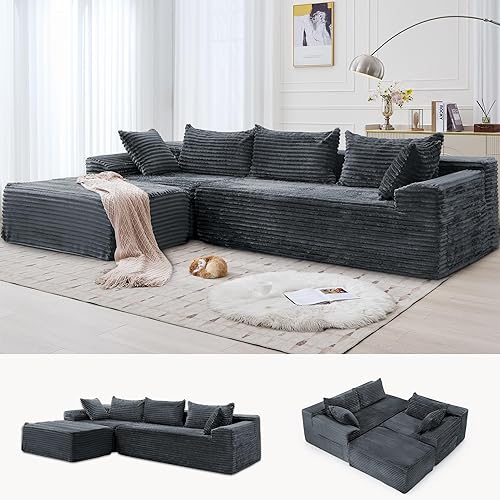
The Korser and Hobestluk are boneless modular sectionals, while the Serta Palisades is a framed 3-seat sofa. This comparison looks at how their layouts, materials, setup and care suit different homes.
 Best for flexible layouts
Korser 110 L-Shaped Modular Sectional With Chaise

Boneless couch vs regular couch: what is the main difference?
A boneless couch favors low, relaxed lounging; a regular couch gives you a more defined seat and back. Those broad labels cover many designs, so compare each couch’s actual construction and dimensions before you buy.
The Korser has 3 independent modules and a 14 in seat height. The Serta Palisades has a wood frame and track arms, giving it a more conventional sofa outline.
The Hobestluk also uses a modular design, with 2 oversized L-shaped chaise pieces. Its deep footprint is made for stretching out, so it needs more floor space than a typical upright sofa.
Some shoppers use “sofa” and “couch” interchangeably. Our guide to sofa vs couch explains the naming difference, while the construction and seat shape tell you more about how a particular model will fit your home.
Which style suits your everyday sitting habits?
Choose a regular couch if you prefer a more upright, defined seat; choose a boneless couch if you spend more time reclining or stretching out. Seat height and depth affect how easily you sit down, stand up and shift positions.
The Korser’s low 14 in seat creates a grounded sitting position. That can suit relaxed lounging, but it may be inconvenient if you prefer a higher seat or have trouble getting up from low furniture.
The Hobestluk has memory foam cushions, removable back cushions and a deep lounge shape. That setup can suit reading, watching TV or reclining, provided you’re comfortable sitting far back from the front edge.
The Serta Palisades is described as better suited for people under 6 ft tall. Its more conventional proportions may appeal if you want a defined sofa seat rather than a broad lounge surface.
Think about the way you use your current couch. If you sit upright to read or work, a deep seat may leave you reaching for extra support behind your back.
If you tend to tuck your legs up or lie down, a shallow seat may feel restrictive.
For seat height, cushion type and frame details to compare, see what to look for in a couch.
Is a boneless couch firm enough for daily use?
There isn’t one firmness level for all boneless couches. The Hobestluk is described as firm and uses memory foam cushions, while the Korser uses high-density, high-elastic foam and is described as plush.
Foam type and a firmness label offer a starting point, but they can’t tell you exactly how a couch will feel for your body and preferred posture. Compare the seat depth and cushion arrangement with the way you like to sit.
A regular couch isn’t automatically firm or supportive either. The Serta combines pocket coil seat cushions with a wood frame, but the seat still needs to suit your preferred height and depth.
Who should skip a boneless couch?
Skip a low, deep boneless couch if you need a higher seat, a compact footprint or a clearly defined upright back. Those needs can make a conventional sofa easier to fit into your routine.
A low seat may be hard to use if you rely on armrests to stand or want a chair-like position. Check the seat height and arm shape before choosing, especially if multiple people with different mobility needs will share it.
A deep modular couch also needs room for its full footprint and enough open floor to move around it. If your living room has narrow walkways or must double as a work area, a smaller, shallower sofa may be a better match.
How do the shapes fit different rooms?
A boneless modular couch can adapt to changing layouts, while a regular sofa usually keeps a fixed footprint. Measure the furniture area and the walkways around it, then compare the couch’s full dimensions with both.
The Korser has 3 independent pieces that can form an L-shape or stand on their own. Its 110 in layout can anchor a living room, but plan for the complete arrangement rather than assuming the separate modules will always save space.
The Hobestluk’s 2 chaise modules offer several setup modes. At 61.5 in deep and 96 in wide, it takes up substantial floor area even if you change the orientation.
The Serta measures 78 in wide and 32.5 in deep. That narrower, shallower outline can be easier to place in a compact room, though you’ll still need clearance for doors, tables and paths through the space.
Mark the proposed footprint on the floor with painter’s tape. Leave the paths you use every day open, and check that drawers, doors and nearby chairs can still move.
If you’re weighing a sectional against separate seating, compare it with a sofa and loveseat arrangement. For more room-planning help, read will a sectional fit in a small living room?.
What setup does each couch need?
Boneless modular couches arrive compressed and need recovery time, while a framed couch may require assembly. Plan for the delivery route and the time you’ll need before the couch is ready to use.
The Korser arrives vacuum-packed and needs no tools or screws. After unpacking, its cushions need 24–48 hours to regain their shape.
The Hobestluk also arrives compressed and needs about 2–3 days to recover. Its two modules are easier to arrange separately than a single large piece, but the assembled couch still has a deep footprint.
The Serta comes in one box and requires assembly. Its 78 in width may help with access, but a box can be harder to maneuver than the finished sofa, so measure doorways, stair turns and hallways before delivery.
Once a compressed couch is unpacked, give the cushions room to expand without stacking them or pushing them into a tight corner. Avoid planning a gathering for the same day if the brand’s recovery window is longer.
For a sectional, measure the route into your home as well as the room. Our guide to measuring for a sectional covers the key dimensions.
How do upholstery and care compare?
Care depends on the fabric and removable covers, not on whether a couch is boneless. Check which parts come off and how the upholstery should be cleaned.
The Hobestluk has a machine-washable cover and removable back cushions. The Korser has corduroy upholstery, but its seat cushion covers aren’t removable.
The Serta has removable seat covers and easy-care polyester upholstery. It is offered in polyester fabric or bonded leather, so confirm which upholstery version you want before ordering.
For any sofa, vacuum seams and creases regularly, and clean spills promptly according to the fabric care directions. Test any cleaner in a hidden spot first, and don’t assume that a removable cover means every cushion or part can go in the wash.
Pets and kids can add extra cleaning needs. Corduroy’s ridges may collect crumbs, while loose hair can sit on the surface of upholstery.
The Korser’s corduroy is described as resisting wear and light scratches, with hair removable by lint roller or wipe.
For routine upkeep, use our guide to how to clean a couch. Check the care directions for the exact fabric before using a cleaner or washing a cover.
What mistakes can you avoid before buying?
The most common mistake is choosing by style name without checking the measurements, seat height and care requirements. A couch can look right in a photo and still crowd a walkway or feel awkward to sit on.
First, compare the whole footprint, not just the width. A deep chaise can extend far into the room, and a modular layout may need extra space when you rearrange it.
Next, measure the route from the delivery entrance to the room. Include narrow doorways, stair landings and turns, and consider whether the couch arrives as a single box or separate modules.
Don’t assume every boneless couch is soft, washable or easy to move. Firmness, removable covers and module count vary by model, so check each feature separately.
Finally, plan for setup time. A compressed couch may need a few days to recover, and a framed couch may need assembly before you can use it.
Which boneless or regular couch should you choose?
Pick a boneless couch for low lounging and flexible modules; pick a regular couch for a framed sofa with a more upright profile. Let your room dimensions, sitting position and care routine make the final call.
Choose the Korser if you want separate modules and are comfortable with its low seat. Choose the Hobestluk if you have room for a deep chaise layout and want a machine-washable cover.
Choose the Serta if you want a framed sofa with a narrower footprint and pocket coil seat cushions. If you’re comparing more conventional seating shapes, browse our guide to choosing the right sectional couch.
For this boneless couch vs regular couch decision, measure first, then match the seat height and depth to how you sit. A flexible lounge setup is useful when you’ll rearrange it; a framed sofa is the clearer choice when you want a defined, familiar seat.
Frequently asked questions
What is a boneless couch?
A boneless couch is a low, lounge-style sofa that relies mainly on cushions and foam rather than a conventional rigid frame. Some are modular, so you can move the sections into different layouts.
Check the exact construction because the term doesn't promise a specific support level or shape.
Is a boneless couch comfortable for everyday sitting?
A boneless couch can suit everyday lounging if you like a deep, low seat and can get up from it comfortably. A traditional sofa may suit upright sitting better because its seat and back have a more defined structure.
Compare seat height, depth and cushion construction for the exact model.
Do boneless couches need assembly?
Many boneless couches arrive compressed and need time to expand, while traditional sofas may require attaching legs or other parts. Setup varies by model: the Korser and Hobestluk options here need no tools, while the Serta Palisades requires assembly.
Leave recovery time before planning to use a compressed couch.
Can you wash a boneless couch cover?
Some boneless couch covers are removable and washable, but care features vary. The Hobestluk cover is machine washable, while the Korser seat cushion cover isn't removable.
Check the care directions for the exact couch before removing or washing fabric, and make sure you can fit the cover in your machine.
Which couch is better for a small room?
A regular sofa often takes less floor depth, while a boneless couch may offer modules you can rearrange. Measure the footprint and the route into the room before deciding.
The Hobestluk sectional is 61.5 in deep, while the Serta sofa is 32.5 in deep.


