Sofa vs Couch: Is There a Real Difference? (October 2026)
Sofa and couch usually mean the same kind of upholstered seat. For the sofa vs couch choice, compare dimensions, layout, fabric care and how you use the room.
On this page (9 sections)
- Sofa vs Couch: Is There a Real Difference?
- Is a sofa different from a couch?
- Which word should you use when shopping?
- What should you compare besides the name?
- Does “sofa” mean formal and “couch” mean casual?
- How do you measure and set up a sofa or couch?
- Which sofa or couch suits your needs?
- What common buying mistakes can you avoid?
- Sofa vs couch: which should you choose?
Sofa vs Couch: Is There a Real Difference?
Sofa and couch usually mean the same kind of upholstered seat. The sofa vs couch difference is mostly word choice, so compare the furniture's shape, size and features before you buy.
Some shoppers hear “sofa” and picture a formal living room, while “couch” sounds casual. Those associations can describe a style, but they don't set a reliable difference in construction, comfort or seating.
A piece that suits your home might appear under either name. Start with how many people need a seat, how much floor space you have, and whether you want a straight sofa or a lounge layout.


Is a sofa different from a couch?
In everyday use, sofa and couch usually refer to the same type of furniture. Neither word guarantees a particular size, frame, cushion style or level of formality.
Both can describe an upholstered seat with a back and arms, meant for more than one person. A standard 3-seat piece may be called either a sofa or a couch.
People sometimes use “sofa” for a more formal piece and “couch” for a casual one. Treat that as personal or regional preference, not a rule that tells you how the furniture is built.
Why do both words exist?
The words have different histories, but their modern meanings overlap. In shopping and conversation, people often use them interchangeably.
Search both terms to see more choices, then judge each one by its dimensions, construction, fabric and layout. If you only search “sofa,” you may miss a style described as a couch, and the reverse can also happen.
Which word should you use when shopping?
Search for both “sofa” and “couch,” then refine by the shape and size you need. Those details tell you more than the label.
Try terms such as 3-seat sofa, compact couch, loveseat or sectional couch. These phrases point toward a likely size or arrangement, but the measurements confirm whether a piece will fit.
A straight sofa can suit a room where you want a clear walkway around the seating. A sectional or chaise layout takes more floor area and may give you a place to stretch out.
Our guide to what to look for in a couch covers measurements, cushions and frame details to compare.
What should you compare besides the name?
Compare width, depth, seat count, cushion layout and the space around the furniture. These features affect how a sofa or couch works in your home.
Measure the intended spot and the route into the room. Include the full depth of a chaise or ottoman, and leave room to walk past the furniture, open nearby doors and reach drawers.
Width and seat count
A loveseat may suit a smaller area, while a wider sofa can provide more room for guests. Seat count is only a guide because cushion width and arm shape affect how much usable seating you get.
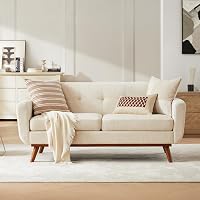
The Kingfun 65 Mid-Century Loveseat is 65.2 inches wide and described as spacious enough for 2 or 3 people. Its width can work in an apartment, bedroom or smaller living area where a longer sofa would crowd the room.
Choose a loveseat if your priority is fitting seating into a limited span or adding a second seating area. Skip it if you regularly need several people to sit together and there's room for a wider sofa.
If you need a straight, wider seat, see our 3-seater sofa guide. For a smaller option, our loveseat picks compare compact styles.
Shape and layout
A standard sofa gives you a straight seating run. A separate ottoman can create a chaise-style place to stretch your legs.
Think about how people move through the room. A sectional may work well for shared lounging, but its footprint can set the direction of the main walkway and limit where other furniture can go.
The Best Choice Products sectional measures 78 x 52 x 34 inches with its ottoman. The ottoman can sit on either side, letting you set up the chaise layout to suit the room.
Choose a sectional when you want a corner arrangement and a place to lounge. Skip it if the room is narrow, the chaise would block a route, or you need a simple straight seat that can move easily between layouts.
Read our comparison of a sectional versus a sofa and loveseat if you're weighing one large seating piece against separate furniture. For more options with a chaise, see sectional couches with a chaise.
Upholstery and care
The words “sofa” and “couch” don't tell you what fabric covers the seat. Check the upholstery and care instructions for the specific piece.
The Signature Design by Ashley Chenille Sofa uses 100% polyester chenille and calls for spot cleaning with solvent-based cleaners. That care routine may matter more than whether someone calls the piece a sofa or couch.
Choose a fabric you can care for with the time and supplies you have. If you expect frequent spills, check the cleaning method before you buy and avoid assuming that a removable cushion means its cover can be washed.
Our guide to sofa fabrics explains how common upholstery choices differ. If you already know you want leather or fabric, use our leather vs fabric comparison to weigh the tradeoffs.
Does “sofa” mean formal and “couch” mean casual?
Not reliably; the style itself determines whether a piece feels formal or casual. A clean-lined sofa can look relaxed, and a couch with tailored upholstery can suit a more formal room.
Look at the arms, legs, back, upholstery and cushion shape. Flared track arms and clean lines create a different look from a low profile with button tufting, regardless of the label.
Room use can guide the style. A family room may call for upholstery and cushions that work with frequent use, while a front sitting room may put more weight on shape and finish.
The Ashley sofa has flared track arms, a gray chenille cover and 3 loose seat cushions. The Kingfun loveseat has a low mid-century profile and button-tufted back, so it can give a smaller room a different look without changing the meaning of sofa or couch.
How do you measure and set up a sofa or couch?
Measure the furniture's footprint and the delivery route before you buy. Room fit depends on more than the length of the wall.
Use a tape measure to mark the width and depth on the floor. Include the arms, ottoman or chaise, then check whether a walkway remains open and whether nearby furniture can still be used.
Measure doorways and tight turns along the route from the entrance to the room. A sofa that fits the room may still be difficult to bring inside; the Ashley sofa requires a doorway at least 32 inches wide.
Read the assembly steps before delivery and make room to work. The Ashley sofa needs its legs screwed into pre-drilled holes, the Kingfun loveseat requires assembly, and the Best Choice sectional uses brackets and a few screws before you open up the cushions.
For the loveseat, check inside the armrests for the legs and hardware. The Best Choice sectional arrives in 2 boxes, which may have different transportation times, so plan the setup around both pieces.
What should you avoid during setup?
Don't decide where furniture goes before checking its full depth. A chaise or ottoman can extend into a walkway even when the main seat fits against the wall.
Avoid assembling a large piece in a tight space where you can't reach the fasteners or turn it. Clear the floor, protect nearby surfaces, and follow the assembly instructions for the particular sofa or couch.
Which sofa or couch suits your needs?
Choose the style that fits your room and routine, then confirm its dimensions and care needs. The label alone can't tell you whether it'll work.
Pick a straight sofa if you want a conventional multi-seat arrangement and have room for its width. The 86-inch Ashley sofa has 3 loose seat cushions and an attached back, with no frame assembly required.
Pick a loveseat when you need a narrower seat for an apartment, bedroom or second seating area. The 65.2-inch Kingfun model has a removable back cushion and requires assembly.
Pick a sectional with an ottoman if you want a flexible chaise arrangement in a compact space. The Best Choice model seats up to 3, but its 78 x 52 inch footprint with the ottoman still needs careful placement.
Skip the sofa or couch that forces you to block an entry, crowd a walkway or accept a care routine you won't follow. If none of the three shapes fits, compare different sizes rather than trying to make the name decide for you.
What common buying mistakes can you avoid?
The most common mistake is choosing by the word or appearance without checking fit and use. A few practical checks can prevent a mismatch.
First, don't assume a loveseat always seats exactly 2 or a sofa always seats 3. Compare the width, cushion layout and arm shape, and think about how many people you need to seat at once.
Second, don't compare only the width. Depth matters for the room and for getting the furniture through doorways, while a chaise or ottoman adds more floor area.
Third, don't treat “easy assembly” as “no setup.” Some pieces only need legs attached, while others need brackets, screws or additional steps.
Check what assembly involves and where hardware is packed.
Finally, don't assume upholstery care is the same across fabrics. Follow the specific cleaning instructions and choose a material that suits your household's habits.
Sofa vs couch: which should you choose?
Choose by layout, room fit and care needs; sofa and couch are usually two names for the same kind of seat. A straight sofa fits a conventional seating run, a loveseat suits limited width, and a sectional works when you want a chaise-style lounge.
Measure the room and delivery route, then compare the details that affect daily use. If the choice is still close, pick the design and fabric that fit your routine.
For a straight seat, start with the 3-seater sofa guide. For a corner lounge, compare sectional couches with a chaise.
Frequently asked questions
Are a sofa and a couch the same thing?
Usually, yes. Both words commonly describe an upholstered seat for several people.
Retailers often use them for the same styles.
For a sofa vs couch decision, compare the piece's measurements, layout, fabric and care needs rather than its name.
Is a couch smaller than a sofa?
No standard rule makes a couch smaller than a sofa. Width, depth and seating capacity depend on the specific piece, not the word used to describe it.
Check the measurements and plan space for arms, walkways and any chaise or ottoman.
What is the difference between a sofa and a loveseat?
A loveseat is generally a smaller seat intended for 2 people, while a standard sofa often has room for 3 or more. Names can vary, so compare actual width and seat layout.
A 65.2-inch loveseat may fit where a wider sofa won't.
Does a sectional count as a sofa or a couch?
A sectional is a sofa or couch made from connected seating sections, often arranged in an L or U shape. People may call it either one, but “sectional” tells you more about its layout.
Measure the full footprint and check which side the chaise occupies.
Should I search for a sofa or a couch?
Try both terms when shopping because the same style may appear under either name. Then narrow your search by details that change fit and use, such as 3-seat, loveseat, sectional, upholstery or overall width.
Confirm the delivery route before ordering.