Sectional Couches: How to Choose the Right One
Choose a sectional couch by its footprint, how your household uses the seats, and whether you need a fixed or flexible layout. Measure the room and delivery route first, then compare shapes, upholstery, care needs and assembly.
On this page (8 sections)
- What should you decide before choosing a sectional couch?
- Which sectional shape works in your room?
- How do you measure for a sectional couch?
- How much seating and depth do you need?
- Which upholstery and cushion features matter for a sectional couch?
- What delivery and assembly details matter?
- What common sectional couch buying mistakes should you avoid?
- Which sectional couch should you choose?
A sectional couch is a good fit when its shape uses your room well and each seat serves a purpose. Measure the full footprint and delivery route, decide who needs to sit or stretch out, then choose a layout and upholstery that suit your routines.
A sectional can make a living room feel organized by defining the seating area, but the return or chaise can also interrupt a walkway. The useful question is not simply whether it fits against a wall.
Ask whether you can move through the room and use the rest of your furniture once it is in place.
For a quick overview of how these sofas are built, see what a sectional sofa is. If you already know you want one, our best sectional couches guide compares options by use.
What should you decide before choosing a sectional couch?
Decide where the sectional will sit and how people will use it before choosing a style. Those two choices narrow the size, shape and features worth considering.
Count the people who regularly need a seat at the same time. Then consider how they use those seats: sitting upright to talk, watching a screen, stretching out, or making room for occasional guests.
Note fixed features such as doors, windows, radiators, outlets and walkways. A sectional can fit along a wall but still block a route across the room or crowd a door when it opens.
Use this checklist to rank what matters:
- Room fit: width, depth and clear walking paths
- Seat use: daily lounging, guests or shared viewing
- Layout: L shape, U shape, chaise or modular pieces
- Chaise side: fixed or reversible, with the extension on a clear side
- Upholstery: texture, cleanup and pet hair
- Delivery: doorways, halls, stairs, turns and packages
- Setup: assembly steps and how the pieces connect
Mark each item as essential, useful or optional. This keeps a convenient extra, like storage, from taking priority over a basic need such as a clear passage to the kitchen.
Which sectional shape works in your room?
An L-shaped sectional suits a corner or one edge of an open room, while a U shape places seating on three sides of a central area. A chaise extends one end for lounging, and modular designs let you change the arrangement.
Think about how you want the room to work before choosing a silhouette. The shape controls where people face, how far the sofa projects into the room and which paths remain open.
When is an L-shaped sectional a good fit?
An L shape works when you want a corner seating area or a boundary between the living room and another part of an open plan. Its shorter return can add a place to lounge without wrapping around the whole room.
Measure the main sofa run and the return separately. Check the return against any nearby doorway, fireplace, window or path, and leave enough room for people to get past the end.
A right- or left-facing return can change the room's flow. If you want the extension to serve as a place to stretch out, compare sectionals with a chaise and verify whether the chaise is fixed or reversible.
When does a U-shaped sectional make sense?
A U-shaped sectional makes sense when you have room for seats on three sides of a shared center. It can bring several people into one conversation or create a generous area for watching a screen together.
Measure the outside width and depth, then check the opening in the middle and the routes around the outside. A U shape may have a large footprint even when its two ends fit against walls.
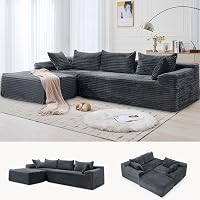
The Ihanherry 111 U-Shaped Cloud Sectional is 111.4 in wide and 56.3 in deep, with 2 ottomans. Its layout can convert to a loveseat, an L shape or a bed, making it a flexible choice for a larger seating zone.
This option is a poor fit if your room has narrow walkways or you need a sectional that stays close to one wall. Its 5 boxes and required assembly also call for space to unpack and put the pieces together.
For more layout examples and trade-offs, see our guide to U-shaped sectional couches. Choose this shape only if its footprint leaves room to move and use nearby tables.
Should you choose a fixed or reversible chaise?
Choose a reversible chaise if you may need to change which side it sits on. A fixed chaise can suit a stable room layout, provided the extension clears nearby furniture and the main route through the room.
“Left” and “right” can depend on the viewpoint. Confirm how the brand defines the chaise side, then compare its diagram with your own room plan.
The Best Choice Products Reversible Chaise Sectional uses a separate ottoman that can sit on either side. At 78 in long and 52 in wide with the ottoman, it is designed for compact rooms and seats up to 3 people.
This is a practical pick for an apartment, dorm, bonus room or home office where flexibility matters. Skip it if you want a large, fixed lounge area or removable cushion covers; its covers are not removable.
Can modular pieces help with an awkward room?
Modular pieces can help when you expect to rearrange seats or need to move components through a tight route separately. Check that the pieces connect as needed and that the available arrangements suit your room.
The Korser 110 L-Shaped Modular Sectional With Chaise has 3 independent pieces, including an armless seat that can stand alone. Its wide layout and 30.08 in seat depth need careful floor planning, even though the modules can be rearranged.
The Korser suits people who want a deep, relaxed seating area and value flexible placement. Skip it if you want removable covers or a firmer, more upright seat; it has plush cushions and its covers are not removable.
How do you measure for a sectional couch?
Measure the room, the full furniture footprint and the delivery route before choosing a sectional. A sofa can fit its final spot and still fail to pass through a doorway or turn.
Record the usable width and depth, then mark the planned outline on the floor with painter's tape or paper. Include the chaise or return, and preserve space for walking, nearby chairs and tables.
Measure the narrowest points from the entrance to the room: doors, halls, stairs, landings and tight corners. Compare them with the dimensions of the sectional's individual pieces or packages when those dimensions are available.
Check for clearance around doors and drawers, and leave room to sit down and stand up without bumping a table. For a step-by-step process, follow our guide to measuring for a sectional.
A compact label does not guarantee an easy fit. Our guide to fitting a sectional in a small living room walks through footprint and layout checks.
How much seating and depth do you need?
Choose seating based on who uses the couch at the same time, then compare seat depth with how you like to sit. A stated seat count is only a starting point because arms, cushions and the shape of the return affect usable space.
For regular guests, look for an open arrangement where people can sit without being boxed into the corner. For daily lounging, a chaise or deeper seat may matter more than maximizing the number of labeled seats.
Think about your usual posture. A deep seat can leave room to curl up or sit with your legs tucked in.
A shallower seat may feel easier for upright sitting. If people in your household have different preferences, compare seat depth and cushion shape before deciding.
The Korser's 30.08 in seat depth favors relaxed lounging, but it may feel too deep if you prefer to sit upright with your feet on the floor. Its full width is about 110 in, so make sure the room can spare that span.
The Chireca 80 Small Sectional With Storage Chaise offers a more compact L-shaped arrangement. Its reversible cushioned seat can form a lounge area or a separate ottoman, and storage gives small rooms a place for everyday items.
This Chireca suits a renter or apartment dweller who wants a compact layout, storage and washable covers. Skip it if you need a sectional with published overall width and height dimensions for a precise fit; confirm those measurements before ordering.
Which upholstery and cushion features matter for a sectional couch?
Compare upholstery by texture, cleanup needs and how it fits your household. Removable covers can make routine care more manageable, but you should check which covers come off and follow their cleaning directions.
Fabric names describe different surfaces. Corduroy has visible ridges, while chenille has a soft, textured surface.
If touch is important, look for a way to assess the fabric before committing and review the return terms.
For homes with pets, consider how hair and dirt may behave on the material and how you can remove them. Korser says its corduroy lets surface hair be removed with a lint roller or wipe, but its cushion covers are not removable.
Chireca has removable, machine-washable seat and back cushion covers. That makes it the clearest option here for buyers who want to wash covers after everyday spills or pet messes.
Ihanherry also has removable seat cushion covers and chenille upholstery. Its product details identify removable seat covers, so check care directions for the specific covers before washing.
Cushion labels can help you compare, but they do not replace a fit check. The Best Choice Products sectional uses foam cushions, and Korser uses high-density foam.
Ihanherry uses high-resilience foam with lumbar support. Choose according to your preferred feel and the support details you want.
For a closer look at materials, read which sofa fabric suits you. Households with pets can also compare options in our guide to sofa fabrics for dogs.
What delivery and assembly details matter?
Check how the sectional arrives and what setup it needs before ordering. Multiple boxes, vacuum-packed cushions and assembly steps affect how much space and time you need on delivery day.
The Best Choice Products sectional arrives in 2 boxes, which may arrive at different times. Its assembly involves aligning brackets and joining a few pieces, then opening the seat and back cushions.
Ihanherry arrives in 5 boxes and requires assembly, with an estimated 30-minute setup. Its box count matters if you need to carry items up stairs or store them briefly before setup.
Korser arrives vacuum-packed and needs time to expand after unpacking. Korser advises allowing 24–48 hours for the cushions to regain their shape, so plan for a temporary setup period before using the full arrangement.
Chireca requires assembly and includes a manual and installation video. Chireca estimates that one person can assemble it in about 30–60 minutes, while two people can work faster.
Before delivery, clear a place to unpack and sort components. For a tight route or a larger design, see how to move a sectional couch into your home.
What common sectional couch buying mistakes should you avoid?
The most common mistake is choosing by wall length alone. A chaise or return adds depth, and a sectional needs clear paths around its full footprint.
Another mistake is forgetting the route into the room. Measure stairs, landings and turns, then consider how many boxes or separate modules will need to pass through them.
Don't choose a chaise side based only on a product name or a quick glance at a photo. View the room from the same direction used in the layout diagram and make sure the extension won't block a door or walkway.
Avoid treating “seats 3” as a promise of generous personal space. Arm width, cushion layout and seat depth all shape how comfortable the space feels when several people sit together.
Finally, don't assume every cushion cover can be washed. Check which pieces have removable covers and whether they are machine washable, then follow the care instructions for the fabric.
Which sectional couch should you choose?
Choose Best Choice Products for a compact reversible layout, Korser for deep modular seating, Ihanherry for a roomy U shape, or Chireca for a smaller storage chaise with washable covers. Let your room measurements and daily use settle the choice.
Pick Best Choice Products if the ottoman's reversible placement solves a layout problem and you need seating for up to 3. Pick Korser if you want 3 pieces you can rearrange and have room for its deep, wide footprint.
Choose Ihanherry when you have a large gathering area for a U-shaped design and want multiple configuration options. Choose Chireca when storage and washable seat and back covers matter in a smaller room, after confirming the dimensions you need.
Once you know the shape you need, compare specific options in our best sectional couches guide. For a side-specific layout, read what a chaise sectional is and which side you need.
Frequently asked questions
How do I choose the right sectional couch?
Start with room and doorway measurements, then choose a shape that leaves clear paths through the room. Decide how many people need seats, whether a chaise or open corner is more useful, and which upholstery fits your cleaning routine.
Compare the full dimensions, delivery route and assembly needs before you order.
Is an L-shaped or U-shaped sectional better?
An L-shaped sectional usually suits a corner or one side of an open room, while a U-shaped sectional creates a seating area with two sides facing the room. Choose by available floor space and how people gather.
Measure the opening inside the U and preserve walkways around the whole footprint.
How do I know which side the chaise should go on?
Stand facing the spot where the sofa will sit and note which side can extend without blocking a doorway, window or walkway. Check whether the chaise is reversible or fixed, and confirm how the maker defines left and right before ordering.
Draw the layout from that same viewpoint.
Can a sectional fit in a small living room?
A sectional can fit in a small living room if its full footprint leaves room to walk, open doors and use nearby furniture. Measure the total width and depth, including the chaise, and mark that outline on the floor.
Compare compact layouts in our small-room sectional guide.
What should I measure before buying a sectional?
Measure the wall or floor area for the sofa, then measure doors, halls, stairs and turns along the delivery route. Check the sectional's dimensions in each planned configuration, plus space for walking and any recliners or drawers to open.
Use our sectional measuring guide for a step-by-step check.