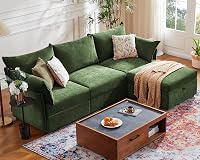
How to Cover a Sectional Couch
Cover each section of your sectional separately. Measure every seat and back, fit the corner piece first, then tuck and anchor the covers so they don't slide when people sit down.
On this page (9 sections)
- Why does a sectional need a different covering approach?
- How do you measure each section before you buy?
- How do you fit a corner sectional cover step by step?
- How do you keep a sectional cover from sliding?
- Which cover type fits a corner sectional best?
- Can you cover a sectional with a chaise?
- Should you use a full slipcover or separate covers?
- How do you care for sectional covers?
- Which cover should you buy for your sectional?
Cover each section of your sectional separately. Measure every seat and back, fit the corner piece first, then tuck and anchor the covers so they don't slide when people sit down.
Learning how to cover a sectional couch starts with treating the corner and the chaise as their own pieces, not one long sofa.
A sectional is shaped like two sofas joined at an angle. A cover made for a straight couch won't fit the corner seat, and a single throw will bunch where the sections meet.
Section-by-section covering solves both problems.
Why does a sectional need a different covering approach?
Because the corner and chaise change the shape and depth of each seat. A straight sofa has one seat depth and one back height; a sectional often has two.
Measure each seat cushion on its own. The corner seat is usually deeper than the side seats, and the chaise cushion can run longer front to back than any other piece.
Covers that ignore those differences pull tight in one spot and sag in another.
The corner is the hardest part. A slipcover built for a corner sectional usually has a shaped corner panel; a flat cover will wrinkle there no matter how well you tuck it.
Plan on three or four separate covers: one for each straight seat run, one for the corner, and one for the chaise if you have one. That split is why covering a sectional takes more measuring than covering a plain couch.
How do you measure each section before you buy?
Measure seat width and depth section by section, and measure the back height too. Write the numbers down for each piece instead of using one set for the whole sofa.
Sofa Shield says to measure from inside arm to inside arm. For the corner seat, measure from the arm or the end of the run to the seam where the next section starts.
For depth, measure from the front edge of the seat to the backrest. For back height, measure from the seat surface to the top of the back.
If your numbers land between two sizes, Sofa Shield recommends sizing up; extra fabric tucks in and helps hold the cover.
Stretch cushion covers list their own range. The LA MEACK seat cover fits 21–24 in wide, 22–28 in deep and 2–10 in thick, so check each cushion against that window.
Measure the chaise last. Its seat often runs longer than the depth on the other seats, so it needs its own cover size.
How do you fit a corner sectional cover step by step?
Fit the corner section first, then work outward to the arms. Starting at the corner lets you line up seams and straps before the easier straight seats.
- Lay the corner cover over the seat and back, centering the shaped corner seam.
- Pull the back flap down behind the back cushions and push it into the gap.
- Tuck the seat fabric into the crease where seat meets back.
- Fasten any straps under the seat frame or cushion.
- Repeat on each straight section, then the chaise.
- Smooth each cover from the center outward so the fabric sits flat.
Work with the cushions in place if your cover is designed to drape over them. For a stretch cushion cover, take the cushion out, pull the cover on, and push it back into the frame.
Keep a helper on the other end of long seat runs. Two people can pull evenly and keep the cover square.
Where should you tuck the cover?
Tuck fabric deep into the seat-back crease and behind the arms. Loose edges are what cause covers to slide and bunch.
Use your hand or a flat plastic tucking tool. Avoid sharp objects that can snag the fabric.
Once the crease is tight, the seat cushion's weight does most of the holding.
For the arms and back, fold the excess down the outside and tuck it under the frame edge. A neat tuck reads as fitted rather than draped.
How do you keep a sectional cover from sliding?
Anchor the seat fabric and use a strap-on or elastic cover. A smooth cover on a smooth cushion will move every time someone sits.
Hook and loop tape is the simple fix. Cut strips to fit the seat and back, press one side to the cushion and one to the cover, then press together.
The SOURRI roll gives 20 ft each of hook and loop in 4 in width, enough for several seats.
Elastic and strap covers do the same job without adhesive. Sofa Shield's corner cover uses a patented 2 in strap with zinc alloy hooks and an adjustable slider to pull the cover tight under the seat.
Push the cover down behind the back cushions as well. The cushion's weight and friction keep the back panel in place.
When is hook and loop tape the better choice?
When your cushion covers are loose and you want a quick, removable hold. Tape suits stretch covers and throws that don't have their own straps.
Clean and dry the cushion surface before pressing the adhesive. Weather-resistant glue helps in a room that gets humid.
If the tape ever needs to come off, peel slowly and follow the maker's care advice for the fabric.
Skip it if your cover already has straps or a tight elastic hem; the cover's own system is simpler and less likely to leave adhesive residue.
Which cover type fits a corner sectional best?
A stretch slipcover fits most corner sectionals; a quilted protector fits seats you want to shield from pets and spills. Pick based on what you need the cover to do.
Stretch fabric moves with the cushion and hugs the corner. It suits homes that want a clean look and easy washing.
A quilted protector is heavier and more protective but needs straps to stay put.
The LA MEACK seat cover is a stretch option with 90% polyester and 10% spandex. Its thick elastic ring sews to the bottom edge, so it grips the cushion instead of the frame.
Sofa Shield's cover uses quilted microfiber that Sofa Shield says is stain and fade resistant and tear resistant. It's reversible, so you get two looks from one cover.
Check the maker's size range against your corner seat before ordering either type.
Can you cover a sectional with a chaise?
Yes, but cover the chaise cushion as its own piece. The long cushion needs a stretch seat cover or a protector sized to its length and depth.
Measure the chaise from the backrest to the front edge and across the width. Then choose a seat cushion cover in that range, or use a strap-on protector that wraps the long cushion.
Avoid draping one big throw over the whole chaise. It bunches at the corner where the chaise meets the main seat.
For the chaise seat, a stretch cover with an elastic hem is the neatest fit. Push the cover on with the cushion out of the frame, then set the cushion back in place.
Should you use a full slipcover or separate covers?
Use a full slipcover only if it's made for your sectional's shape; otherwise use separate covers. A slipcover sized for a straight sofa won't handle the corner.
Full slipcovers for sectionals come with shaped corner panels and separate pieces for the chaise. They give a more uniform look but are harder to install and more expensive.
Separate covers are easier to wash one piece at a time. That matters in a home with pets or kids, where one seat gets dirty faster than the rest.
Our guide to a sectional with washable covers covers which fabrics handle repeated washing best.
If you want a finished look without buying a shaped slipcover, separate covers in the same color read as one set.
How do you care for sectional covers?
Wash on the care label's setting and dry fully before refitting. A damp cover stretches and can shrink as it dries.
Sofa Shield's cover is machine washable and can be tumble dried. Wash on a gentle setting and check the fabric after each cycle.
LA MEACK's stretch cover is machine or hand washable in cold water; hang it to dry and skip bleach or ironing.
Vacuum the covers between washes to lift pet hair and crumbs. A quick vacuum keeps the fabric from looking grimy and reduces how often you need a full wash.
Check straps and tape after washing. Re-press adhesive strips only on a dry surface.
Which cover should you buy for your sectional?
Start with a strap-on corner cover for the corner and chaise, then add stretch seat covers for the straight seats. That mix handles the shape better than one flat cover.
The Sofa Shield cover suits the corner piece and the seat run next to it. Its long arm and back flaps shield the areas that collect pet hair and dirt.
Measure inside arm to inside arm and size up if you're between sizes.
For stretch coverage on individual cushions, the LA MEACK set covers three seat or back cushions. It's the neatest option for the chaise seat and the straight seats.
Skip fabric covers on leather. Sofa Shield says its covers aren't recommended for leather because they slip.
If your sectional is leather, choose a stretch cover with a tight hem and add tape for grip.
Before you buy, confirm the size of the whole piece; our guide to how much a sectional couch weighs helps you plan the delivery, and how to move a sectional couch covers getting it through the door. For the sofa itself, compare the best sectional couches by size and fabric.
Measure each section, fit the corner first, and anchor the fabric before you sit. That order is the whole answer to how to cover a sectional couch, and it keeps the cover flat after the first week.
Frequently asked questions
Can you put one cover over a whole sectional?
Only if the cover is made for your exact sectional shape and size. Most slipcovers and throws are built for straight sofas, so a single piece usually bunches at the corner or leaves the chaise uncovered.
Section-by-section covers fit better.
Do sectional covers work on leather?
Most fabric covers slip on leather because the surface is smooth. Sofa Shield says its covers aren't recommended for leather furniture and will slide.
A stretch cover with a strong elastic hem holds better, but leather still needs a grippier option.
Should I cover the chaise part differently?
Treat the chaise as its own section. A stretch seat cushion cover or a strap-on protector handles the long chaise cushion well.
Measure the chaise seat from the backrest to the front edge, not just the seat depth, before you buy.
How often should I wash a sectional cover?
Wash when it looks soiled or smells stale, and follow the care label for water temperature and drying. Machine washable microfiber covers like Sofa Shield's can go in the washer and dryer.
Check the label first so you don't shrink a stretch fabric.